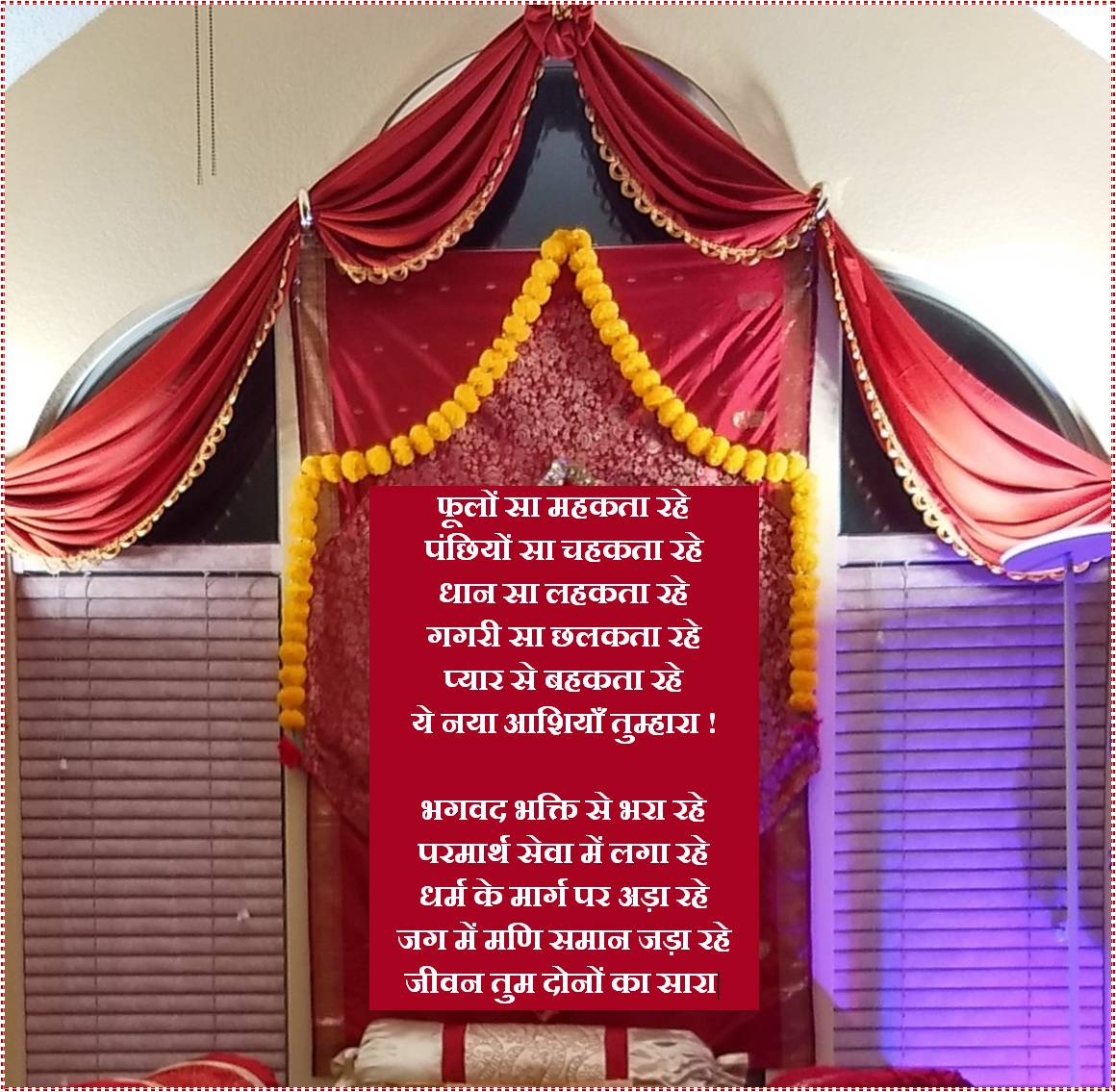
गृह प्रवेश के शुभ अवसर पर माता पिता के आशीर्वचन|
घर की भव्यता उसमें रहने वाले परिवार में परस्पर प्रेम, अतिथि सत्कार, धर्म-पारायण व्यवहार , लोक-कल्याण में तत्परता आदि सद-गुणों की ही प्रतिबिंब होती है |

Month: October 2021
गृह प्रवेश के शुभ अवसर पर माता पिता के आशीर्वचन|
घर की भव्यता उसमें रहने वाले परिवार में परस्पर प्रेम, अतिथि सत्कार, धर्म-पारायण व्यवहार , लोक-कल्याण में तत्परता आदि सद-गुणों की ही प्रतिबिंब होती है |
The Hindu marriage ritual of Kanyadaan was portrayed in a recent garment ad as regressive and rooted in patriarchy. In a previous article we addressed the root of this debate – mis-translation of word meaning and misinterpretation of its symbolism. Next we look closer at what bothers some women. What is wrong with Kanyadaan? What does need change?
Without being facetious, being born is patriarchy. A little biology only to clarify the point. The father’s chromosome determines the sex of the child. A Y-chromosome from the father conceives a male child. On the other hand, an X-chromosome from the father gives birth to a female child. The mother can only contribute an X-chromosome, one of two needed for conception.
Do we resent this inequality? No. We celebrate the differences. We recognize how essential and complimentary this difference, this patriarchy, is to creation & sustenance of life itself.
Patriarchy, by itself, cannot be the issue with Kanyadaan.
Clearly, it is just a label! But the label betrays a sense of resentment, misplaced as it is, at the unfortunate reality of an imbalance in male-female power-structures within the society. This imbalance continues to find patronage in a variety of ways: distinct rules of behavior, social limits to engagement in society, (e.g. education, economic pursuits etc), ineligibility for certain roles and functions, society’s attitudes towards sexual violence. These are matters of daily import for us all, especially for those who bear the brunt. These need correction and urgently.
Sadly, these develop in all societies, and India is no exception. However, the realities of female experience today must be seen as a social distortion, not a product of the Universalist worldview of Hindu thought, to help us reach meaningful solutions.
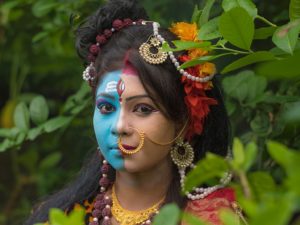
Hindu philosophical paradigm considers female energy as an equal and complimentary part of the male energy in one whole – a la Ardh-Nareeshwar. It dares to imagine God in male-female pairs – Radha Krishna, Sita Ram, Uma-Mahesh etc. It is the only religion that recognizes a female aspect of God – Shakti. Can such a philosophy really be the source of any demeaning tradition that treats women as inferior or subservient? Hardly so!
Ritual helps encapsulate such enlightened philosophy into practice, and helps pass it down the generations. It is imperative to decode it accurately so we do not loose the wisdom they contain. We must look for causes of power imbalance between sexes outside of Kanyadaan, if we are to find meaningful solutions.
Kanyadaan is based on love… dismissing it as Hindu ‘patriarchy’ is inappropriate. But it is also true that many girls feel hurt; it’s a reality to be acknowledged with empathy. While respecting our rituals for their real meaning and message, the sense of hurt that many women feel deserve our consideration.
Today, hearing loosely-worded statements like “she’s not your daughter anymore” or “you’re giving her away to the groom” can be hurtful. In the old days when transport from one village to another was difficult or non-existent, it

may have been the reality of marriage for the woman and her family. In that circumstance these words may have even helped the girl’s parents to let her go, and for the girl to accept the finality of the change.
Any premise that the girl, while joining another family, must cut all connection with parents or family is not supported by tradition. Shortly after marriage traditionally the girl would return to her parental home for a visit with her family. So statements made in this vein are distortions of the original.
There is room for improvement on what is said, how it is said and, most importantly, in educating ourselves about the source, symbolism and purpose of Kanyadaan. For that, read ‘Kanyadaan is Kanyamaan‘
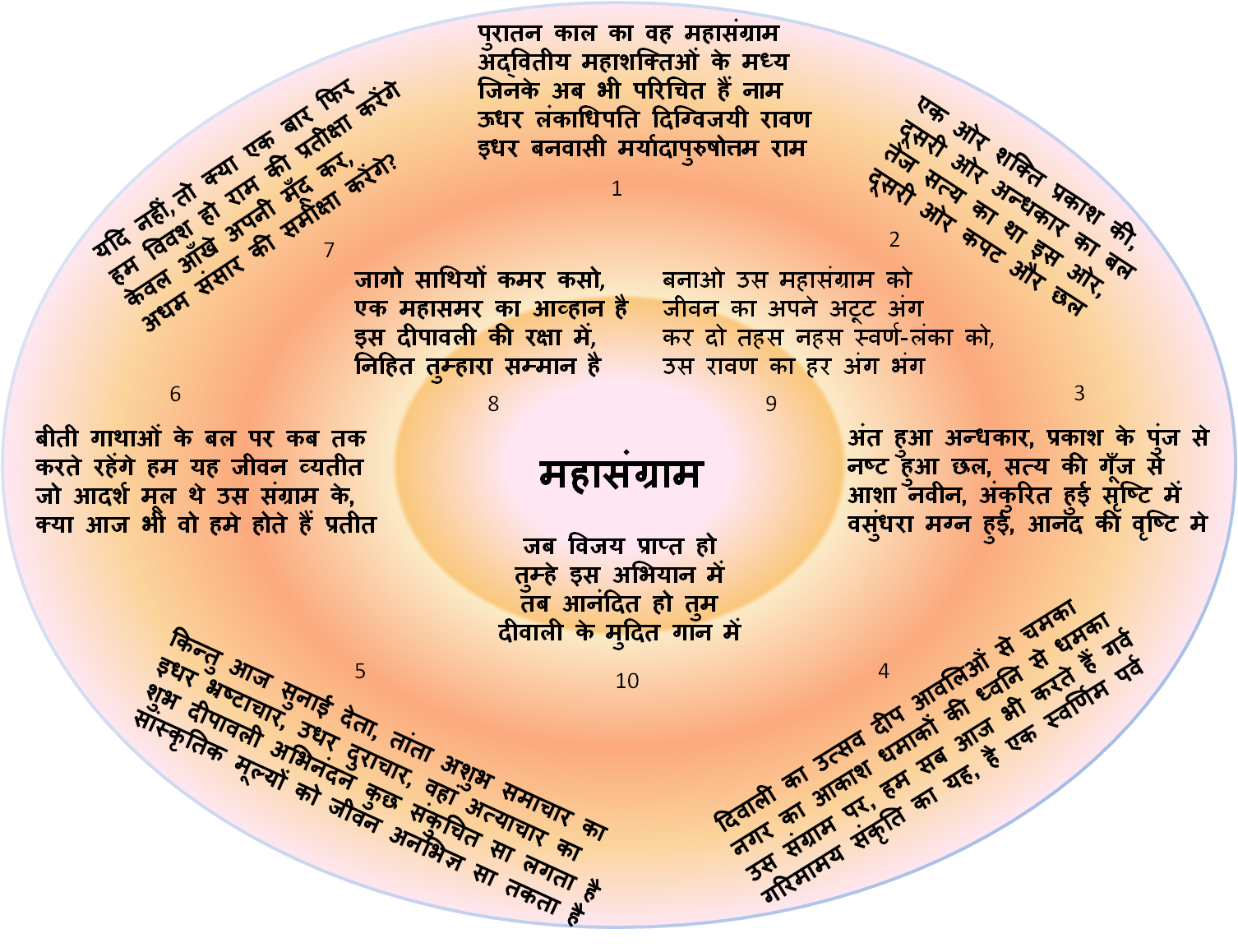
दीपावली का महासंग्राम हम सबको लड़ना होगा|
इसमे ही निहित हमारा सम्मान है |
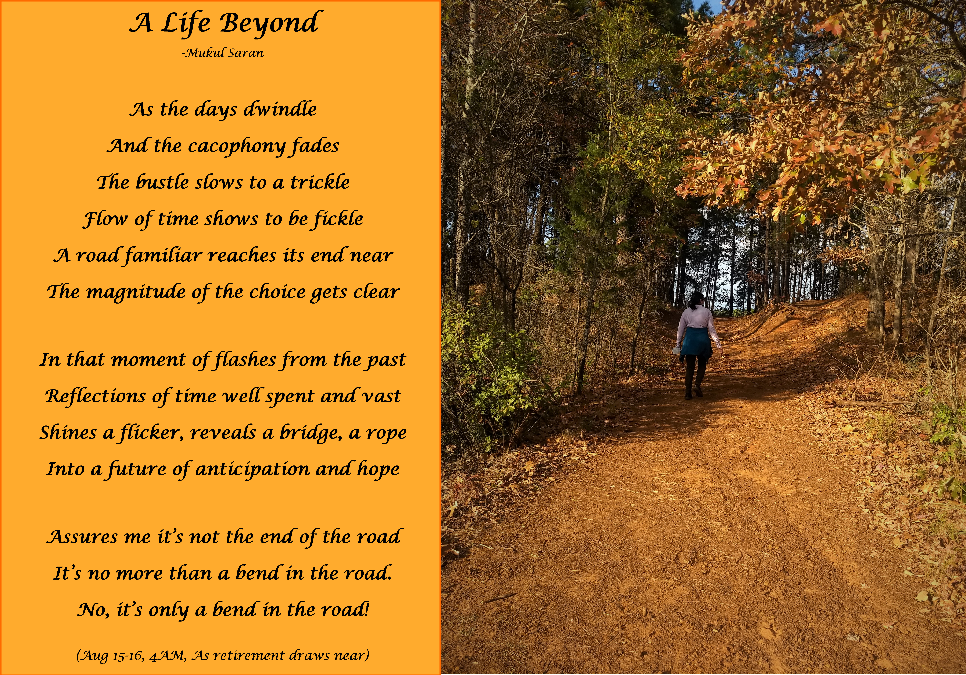
End of a long, satisfying journey on a road that now wants to take a turn. Retirement from TI.
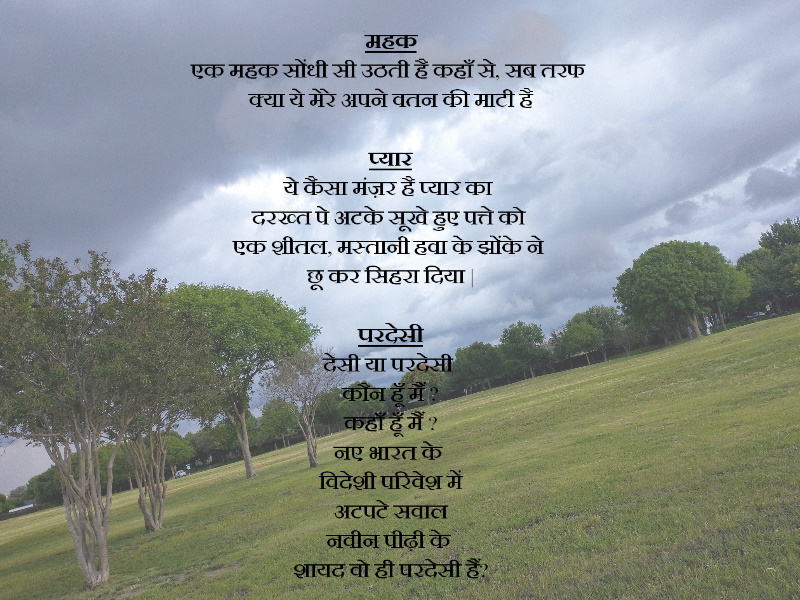
कुछ उद्गार जो इंदौर वायुस्थल पर जून 2017 में भारत से लौटने के अवसर पर यूँ ही मानस पटल में अंकुरित हुए….
The day had come… more accurately, the night – around 1:30AM in Winnipeg, Canada in late August of 1981. The mind, the body, the universe was confused. Time-zones do that to you. My would-be Ph.D. supervisor was not there this late at night. The university’s India students association had no welcoming service. Google was born only in 1998, a full 17 yrs after the fact. Cellphones were in a pre-natal stage (the first commercial ones came out in 1983). No family or friends, an unfamiliar country! It felt foreign – the airport, the people, the phone-system, the transportation system – everything! At 22yrs old, I found myself struggling as a freshly-landed, lonely foreign student in Canada.

The night marked the end of a maiden flight that had taken me straight out of my native India. My previous international travel was as a 16yr old accompanying my parents on a bus to Nepal.
Clueless about my whereabouts, it only made sense to stay put at the desolate airport for the night. As the sun came through, the pocket phone diary my parents had handed me yielded a contact. This gentleman had been a professional contact of an uncle of mine, many years prior. How I made the call on that coin-operated rotary phone in Canada dodges the memory, but it turned out to be a lifesaver. He and his wife very kindly picked this stranger up from the airport, fed good hot breakfast, and then dropped me outside Tache Hall. Exhausted, I did not notice the beautiful colonial design of the dorm building.
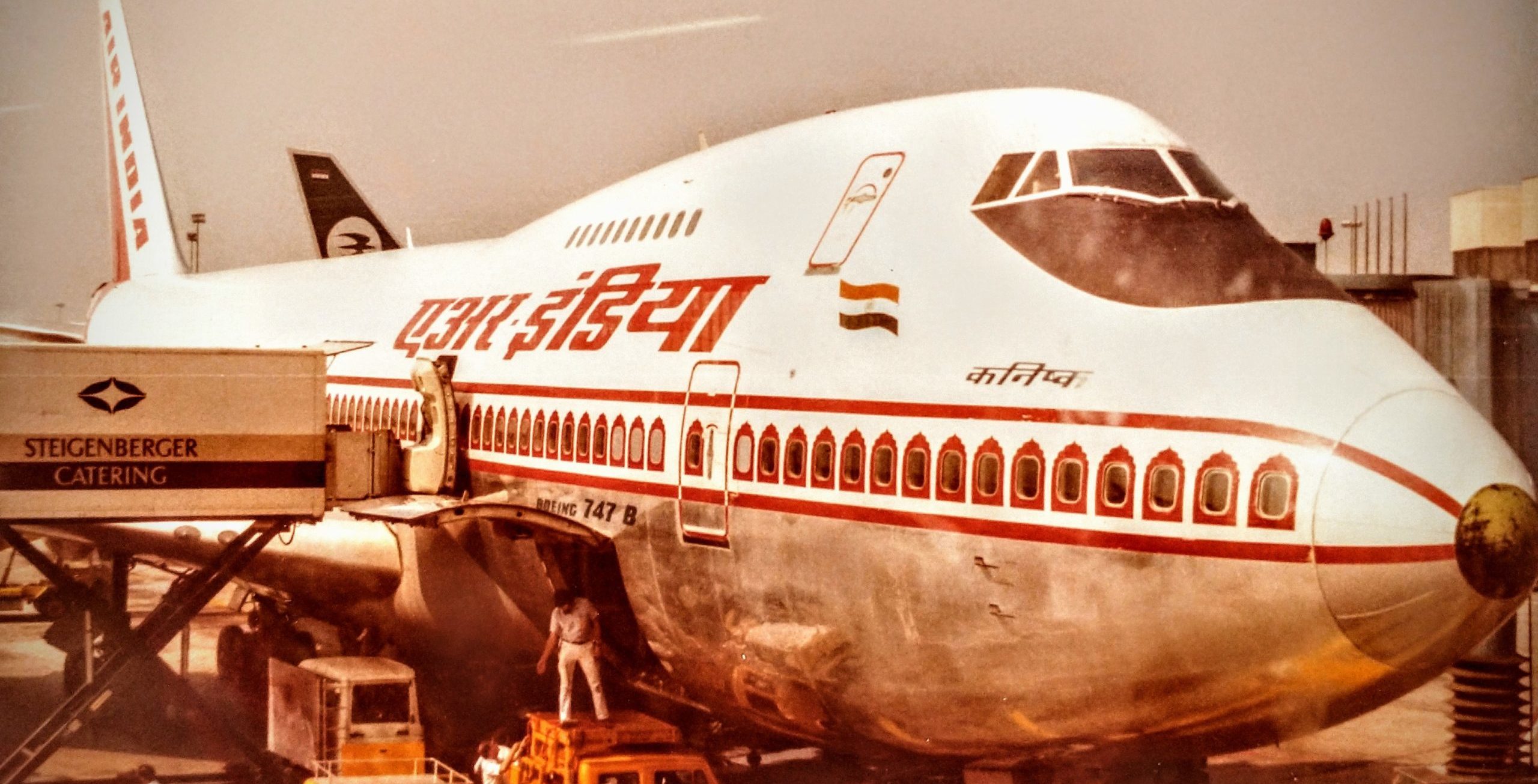
That breakfast surely helped me break an unintended, prolonged 18+hrs fast. I had given up eating food a few hours after taking off from Delhi on Air India flight to NY. Whenever the air-hostess brought the meals my confused body rejected them; the body clock had lost its rhythm. Emotions had consumed me; this separation from my family and my land was going to be a long and uncertain one. My parents have had to borrow money just to put me on that flight. The finality of the moment dawned on me as the excitement of travel in previous days yielded to home-sickness.
Travel from NY, onward to Toronto, allowed no breaks to eat. The US immigration officer looked perplexed as he examined my papers. I had no US transit visa to enable ground transport to LaGuardia, a connecting airport several miles away. My travel agent had not advised of this detail. The officer drew me aside and went to get his associate. He came back with an African-American lady officer to escort me out of the airport. She walked with me to the bus station, sat on the bus through to LaGuardia, navigated to the check-in counter for NY-Toronto flight, and accompanied me through security until I had securely boarded the flight. Had it not been so, I’d likely be stuck in NY that night! Thank the travel agent!
The final flight from Toronto to Winnipeg was uneventful, but it was too late for any food service. That breakfast in Winnipeg had ended the forced, prolonged fast.
It was Friday morning that I flung my bags on the bed in the dorm, and went into a deep slumber almost immediately. The morning after, on a beautiful Saturday, I woke up again. I had literally slept for nearly 24hrs since the last breakfast. Hungry and weak in search of food, ventured out of my room on the University of Manitoba campus. Not a soul was in sight. Coming from a hugely more populous place buzzing with a constant din 24/7, I had never seen a place so desolate. A single car parked outside another colonial structure on campus – later learned it was called the Admin Bldg – gave me some hope.
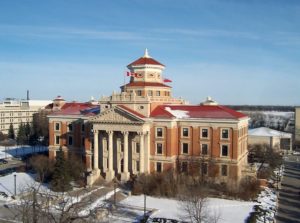
The owner emerged nearly 30mins later. In my unpracticed Indian English, I mustered enough courage to ask for help. “Nothing on campus would be open for the next 3 days” I was told. It was the Labor-day long weekend. It was also my first encounter with this vocabulary. He was a kind man. He dropped me off at a McDonald’s a few short kilometers from Campus.
I had never heard that name before. For almost all of us Indians, Canada was a far away fantasy land where Eskimos lived in Igloos. No internet or Google existed to help us know any better. That McDonald’s went into the history book (my personal one!) when it fed a hungry, vegetarian Indian kid his first meal in Canada. Of course in 1981, neither McDonald’s, nor Tache Hall, or for that matter even the city of Winnipeg or the province of Manitoba, would know what ‘vegetarian’ means. Nevertheless, found enough to fill me up – some French Fries and Vanilla milk-shake! I was happy that the meal only cost a couple of dollars; my total cash assets of a few hundred dollars was all I had. That’s ALL the foreign currency that India could afford to let international students take out of the country, including their fees.
As a side note, years later McDonald’s declared that their fries were not vegetarian; they used ‘formula 47’ which included beef tallow. I felt corrupted. Unwittingly, a lifelong vegetarian Hindu boy had enjoyed the fries at the cost of the cows slaughtered for his eating pleasure.
How the next few days passed on campus remains a complete blur. I only recall not having enough mental resources to seek out the Physics department or my PhD supervisor for another three days. When I did finally reach him his relief was palpable; he had finally found his lost student. It became clear that he did visit the airport to receive me but returned baffled that I was not on that flight from Toronto. He had misread my telegram “arriving at 00:00hr”. He went to the airport a full 24hrs later!
My parents in India had no inkling of these 36+ hrs, or even whether their son had reached the destination, until over a month later when my first hand-written letter reached them in Bhopal. It leaves me bewildered as I think about how they might have felt not knowing for all those weeks. I will never truly know.
The ability of humans to survive through much worse situations is incredible. Thankful I am well equipped to write about it today!