
With each passing away of an Indian celebrity, the social media gets flooded with shorthand RIP messages. What does one make of these – just short-hand expressions of condolence or a prayer for the departed soul? Can Hindus ever RIP? Let’s decode what a RIP prayer would mean for a dead Hindu.
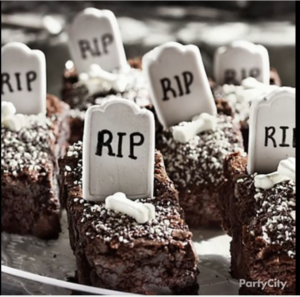
RIP is a Christian term first found on tombstones in the 18th century. It reflects the belief that the soul and the body are separated at death and must ‘rest’ until resurrection when they will be reunited and be with the Lord in Heaven. Only Christian faithful will have peace. Others will be eternally damned in Hell. So, can Hindus ever RIP?
The closest Hindu conception of ‘rest’ in the afterlife is when the ‘Jeevatma’, upon leaving the dead body, may enjoy Heaven as a reward for its good karma on earth. It must resume the cycle of rebirth and suffering upon completion of its term. But heaven is not what the jeevatma needs. It’s ultimate destination is Moksha, a liberation from the cycle of reincarnations and attainment of unending bliss.
Wishing RIP to a Hindu is like wishing the Chandrayaan mission success in reaching the earth’s orbit, rather than in landing successfully on the moon!
Words are tied to ideas, values and beliefs, e.g. words like ‘Chairman’ have fallen out of favor as they tend to associate only men with positions of authority, subconsciously. The city of Trivendrum is better referred to by its original name Tiruvananthpuram, which means the ‘town of Lord Anantha’, rather than the meaningless one coined by the British.
Foreign words, like RIP, reinforce foreign concepts. They dissociate the vocabulary from our native values, ideas and beliefs. Without continuous nourishment, these cultural traits wither and die. It is essential, therefore, that Hindus use the traditional terminology to help sustain our paradigm of life. It is at the root of our culture and traditions.
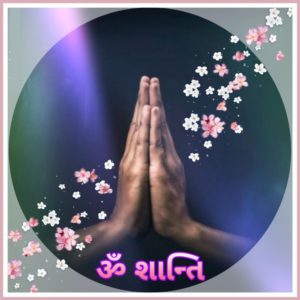
Only then will our future generations know what it means to say ‘Om Shanti’.
Om symbolizes the formless infinite from which all creation arises and dissolves into. Shanti refers not just to peace, but to Bliss that is an unchanging characteristic of the infinite soul. Om Shanti is a prayer that the jeevatma gets off the cycles of reincarnation, realizing its own True nature – an inseparable part of the infinite whole Paramatma – conscious, eternal and blissful.